Introduction
The late 20th and early 21st centuries in golf can be characterized by two words: Tiger Woods. Emerging on the professional scene in 1996, Woods’s impact on the sport has been profound, driving its popularity to unprecedented heights. This blog delves into Woods’s life, his rise to stardom, and how he reshaped the game of golf.
Tiger Woods: A Childhood Prodigy
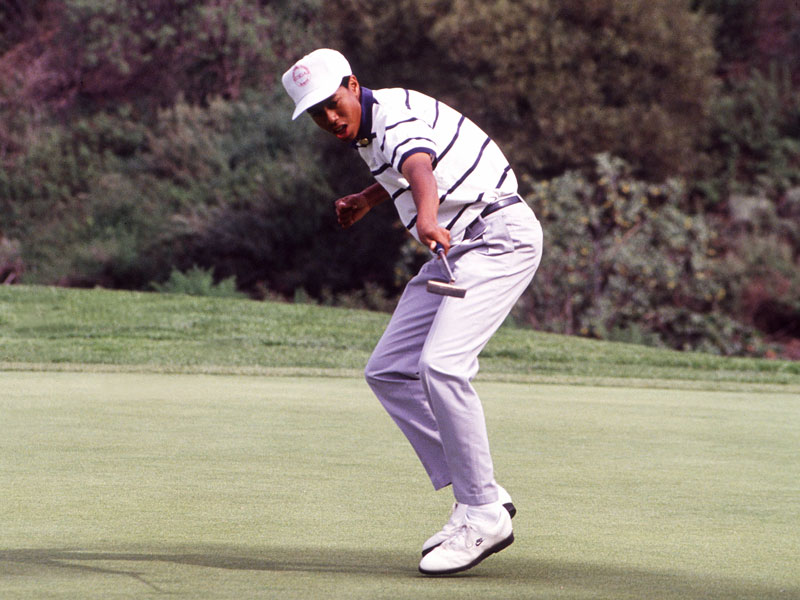
Tiger Woods’s journey to golf superstardom began almost from his cradle. Born Eldrick Tont Woods, Tiger was introduced to golf before the age of two by his father, Earl Woods, a retired Lieutenant Colonel and amateur golfer. Tiger’s early relationship with the game was marked by remarkable milestones; he appeared on “The Mike Douglas Show” to showcase his golfing talents at just two years old and shot a 48 over nine holes at age three. By the age of five, Woods was featured in “Golf Digest” and on ABC’s “That’s Incredible!”

This early exposure to the sport, coupled with his father’s guidance and mentorship, laid the foundation for his future success. Tiger developed not just a technical prowess but a mental toughness and focus that would become his hallmarks. His amateur career was nothing short of historic, capturing three consecutive U.S. Junior Amateur titles followed by three consecutive U.S. Amateur titles, a feat unmatched in the annals of golf.
The Rise of Tiger Woods
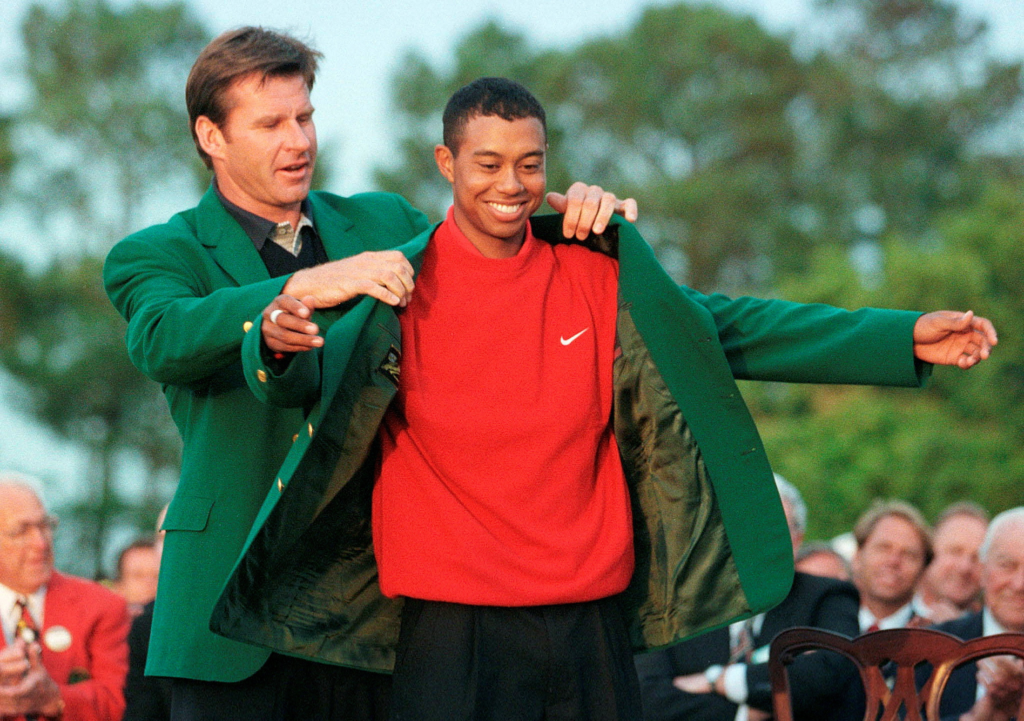
Tiger Woods’s introduction to the world of golf was nothing short of meteoric. Winning his first major, The Masters, in 1997 by a record-breaking 12 strokes announced his arrival at the age of 21! His dominance was not just in his victories but in the manner of his play—powerful drives, precision iron play, and a mental game that seemed unshakeable.
Tiger’s dominance was something that has never been seen before or since. His mental fortitude was unmatched, every tournament he arrived at not only did he know he was winning, but all of his opponents knew he’d win. That is the level of domination he showed in his career.
Breaking Records and Barriers
Woods’s influence extended beyond the course. He broke racial barriers in a sport historically seen as exclusive and became a global icon. His appeal changed the trajectory of golf’s popularity among all audiences, and his marketability brought significant sponsorship and television ratings to the sport. Some of his most impressive records over his career are:
- Youngest Masters Champion: Woods became the youngest player to win the Masters at Augusta National in 1997, at the age of 21 years, 3 months, and 14 days. His record-breaking win was by a margin of 12 strokes, the largest in Masters history.
- Most Consecutive Cuts Made: Tiger set the record for most consecutive cuts made with 142, from 1998 to 2005. This incredible streak showcases his consistency and high level of performance over a prolonged period.
- Fastest to 50 Wins on the PGA Tour: Woods reached 50 PGA Tour wins at the youngest age, achieving this milestone at 30 years and 7 months old, showcasing his early and sustained success on the tour.
- Lowest Scoring Average in a Season: In 2000, Tiger Woods set the record for the lowest scoring average in a PGA Tour season, with an average score of 68.17. This record is a testament to his dominance and consistency throughout that year.
- Career Grand Slam Achievements: Woods is the youngest golfer to achieve the Career Grand Slam, winning all four major championships. He completed this feat at 24 years old. Additionally, he is one of only five players to have won all four major championships in their career, joining Jack Nicklaus, Gary Player, Ben Hogan, and Gene Sarazen. Woods has completed the Career Grand Slam three times over.
- Tiger Slam: Although not an official record, Woods is the only player to hold all four major championship titles simultaneously, having won the U.S. Open, The Open Championship, and the PGA Championship in 2000, and the Masters in 2001. This achievement, often referred to as the “Tiger Slam,” is unique in the modern era of golf.
- Most Wins in a Single PGA Tour Event: Woods has won the same event eight times in two different tournaments: the Arnold Palmer Invitational and the WGC-Bridgestone Invitational, showcasing his dominance at specific venues.
- PGA Tour Player of the Year Awards: Tiger has won the PGA Tour Player of the Year award a record 11 times, highlighting his excellence and dominance over two decades.
- Most Weeks at World Number One: Woods has spent a record total of 683 weeks as the World Number One in the Official World Golf Ranking, far surpassing any other golfer’s tenure at the top.
These records only scratch the surface of Tiger Woods’s impact on the sport. His remarkable achievements have not only rewritten the golf record books but have also significantly influenced the next generation of golfers, setting a high bar for excellence and dedication in the sport.
Memorable Championships
Woods’s career is filled with memorable moments, but perhaps none as significant as the 2000 U.S. Open at Pebble Beach, where he won by an astonishing 15 strokes. This victory was part of what is known as the “Tiger Slam,” where Woods held all four major championship titles simultaneously, a feat unmatched in the modern era.
Another of his most memorable moments was the first PGA event he played, The LA Open at Riviera. At just 16 years old in 1992, he played in his first PGA Tour event as an amateur. In addition to his aforementioned 1997 record setting Masters victory, his most recent Masters victory (and 5th green jacket), was seen as enormous among golf fans. Questions were being asked if he would return to the winner’s circle in his career, and those questions were answered with this victory.

Impact Beyond the Green
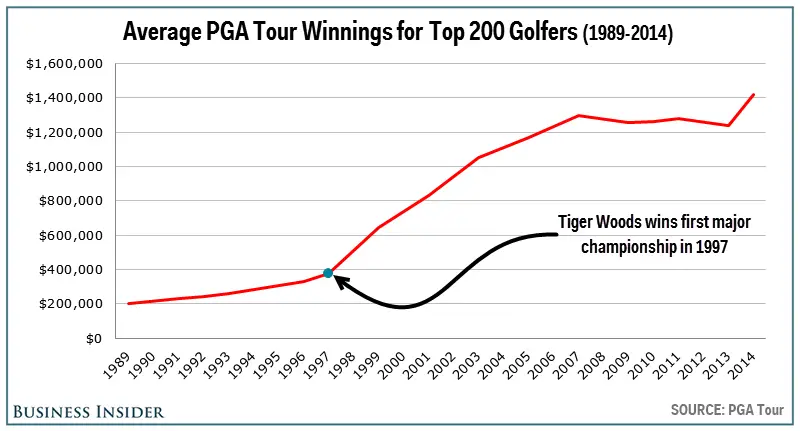
Beyond his championships, Woods’s impact can be seen in the increased purses for PGA Tour events, the expansion of golf into new markets, and the inspiration he provided to a generation of golfers. Players like Rory McIlroy, Jordan Spieth, and many others have cited Woods as a key influence in their careers. Some people have even hinted that Tiger would’ve already broke the wins and majors record had he not inspired all of these young superstars to golf.
He altered the trajectory of the game. Growth in the game of golf had stagnated in the early 1990’s, but with the emergence of Tiger the game saw record growth! The game grew by nearly 20% over the next 10 years and has continued to grow since. Golf now has twice as many players as it did in 1996, this is in large part due to Tiger Woods.
Conclusion
The era of Tiger Woods has been one of transformation for golf, marked by incredible achievements and a broader appeal of the sport. As we move further into the 21st century, Woods’s legacy continues to shape the game, both in how it’s played and who plays it. The Tiger Woods era is a testament to the profound impact one individual can have on a sport, elevating golf to new heights and inspiring millions around the globe.