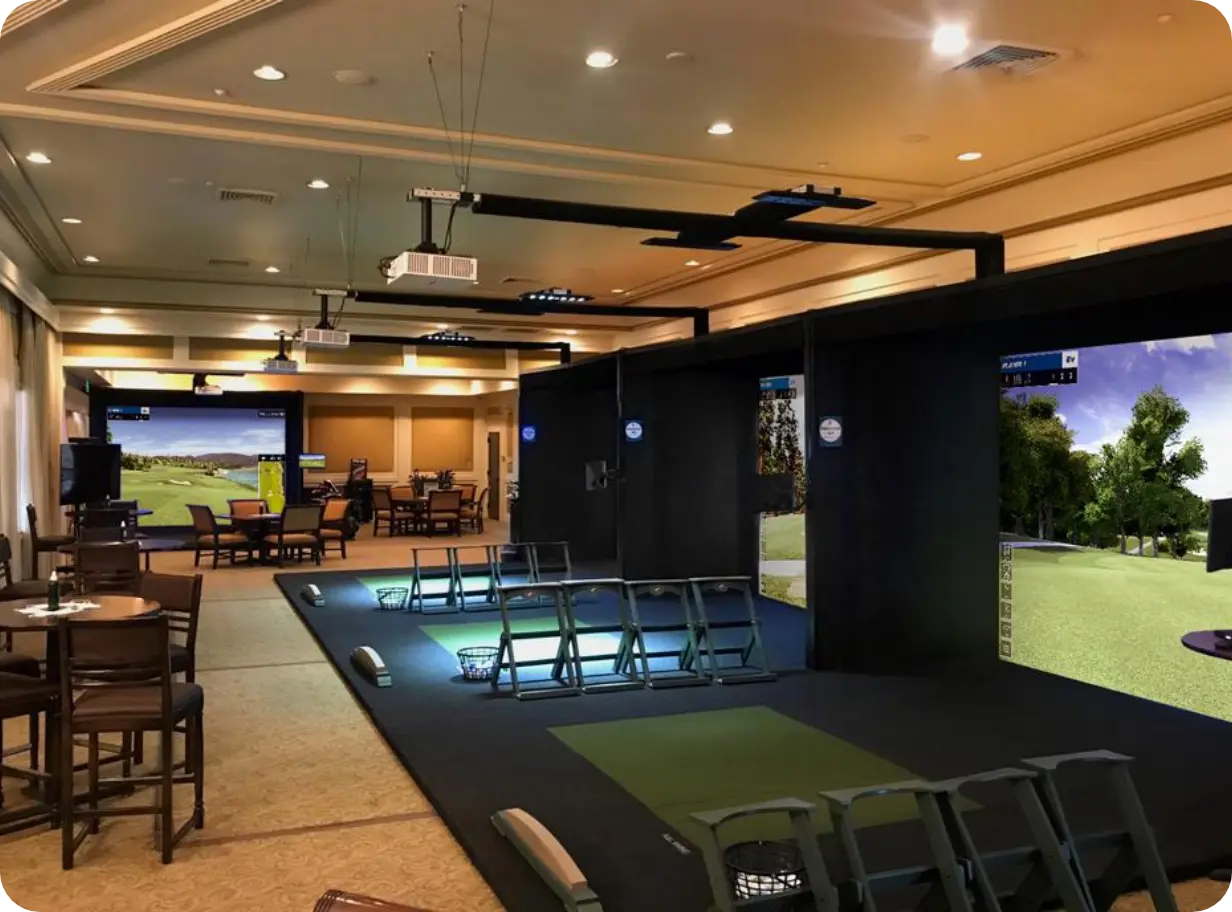
Short answer: You can keep your swing sharp through the off-season with three habits. Make short, frequent swings at home. Use a net, simulator or launch monitor for focused, feedback-driven work. And keep your putting stroke alive on carpet or a mat. PGA coaches describe winter as a chance to work on technique without the pressure of posting a score.
Coach Randy Smith, a former PGA Professional of the Year, told PGA.com he’d rather call winter the “preparation season” than the off-season. Here’s a practical plan built on advice from PGA professionals, Golf Digest and Trackman.
Why the Off-Season Is the Best Time for Swing Changes
Swing changes usually get worse before they get better. Michigan instructor Jason Guss told Golf Digest he makes bigger technical changes with students in winter, because they aren’t playing and are more likely to stick with a change for two or three months. In summer, a couple of bad days on the course often sends players back to their old swing. Hitting into a net also takes the sting out of a bad result. As Guss put it, “the ball’s only going five feet.”
Drill 1: Daily Heavy-and-Light Swings
- What: 15–20 swings almost every day, even twice a day, per Randy Smith on PGA.com.
- How: Alternate a heavy club (Smith suggests your wedge, swung several inches off the ground) with something light, like an alignment rod, to feel speed.
- Why: Smith says simple daily swinging can help build swing speed and form, and that most golfers skip it.
Drill 2: Slow-Motion Swings With a Mirror or Video
- What: PGA and LPGA Master Professional Alison Curdt suggests 30 slow swings in the morning, 30 at lunch and 30 at night.
- How: Make the motion you’re trying to learn in very slow motion while watching a mirror or video, then add speed as the weather warms.
- Why: In Curdt’s words, very slow motion lets “the muscles and the brain figure out the best pattern possible.”
Drill 3: Net Practice With a Purpose
Guss recommends choosing just one or two things to work on indoors and filming your swings. He names two that work especially well into a net:
- Center contact: Put clubface spray or impact tape on the face to see where you’re striking it.
- Square clubface: Hang a ribbon or rope in the center of the net and aim at it. For a right-handed golfer, balls hitting right of the ribbon suggest an open face, and balls hitting left suggest a closed face.
- Slow down between balls: Guss says filming and reviewing 20 swings can give you far more quality than raking and hitting ball after ball on a range.
Drill 4: Keep Your Putting Stroke Alive
Your short game doesn’t need a simulator. PGA professionals recommend these at-home drills:
- Double Gate Drill (path): Set two alignment sticks 4–6 inches apart, a few feet in front of the ball, as a gate the ball rolls through. Place two cups just outside the width of your putter head as a second gate for the stroke. Start at about 4 feet and move back 2 feet after each set of three balls, up to 10 feet. Source: PGA Professional Brendon Elliott, PGA.com.
- 3-Point Drill (pressure and distance): Mark spots at 3, 5 and 7 feet. Make three in a row from each before moving back, and restart if you miss. Go for 15–20 minutes. Source: Brendon Elliott, PGA.com.
- Carpet lag putting: PGA Director of Golf Brian Crowell notes carpet can be fast, which makes it useful for lag putting. Lay down tape to define targets.
Drill 5: Simulator and Launch Monitor Sessions
PGA.com notes that simulators are a great way to stay sharp in winter. To make that time count, focus on a few numbers instead of all of them.
- Low point: Trackman instructor Tom Stickney II suggests hitting 20–50-yard shots and checking that your low point stays in a consistent range just after the ball.
- Club path: Hit 7-irons and check two things. Is your path moving the direction you feel it is? Can you keep it within a consistent range? Stickney suggests a three-degree window.
- Face angle: Face angle mostly controls starting direction. Stickney’s drill is to put a bucket between you and the target, hit shots just left and right of it, and note the face angle on each.
- Smash factor: Golf Digest’s Ron Kaspriske points out that a centered 95-mph driver swing can go as far as a 100-mph swing struck out on the toe.
- Don’t chase speed indoors: Kaspriske also warns that cranking up swing speed on a simulator usually doesn’t carry over, because you’ll slow back down on the course.
Drill 6: Make Indoor Practice Transfer
Winter improvement only matters if it shows up in spring. Trackman’s coaching content tells the story of a player who fixed a 30-year slice indoors, with path numbers moving from −10 to positive. He sliced his first tee shot in spring anyway, because he was still aiming far left out of old habit.
- Mix it up after warming up. A 2024 systematic review of 52 golf motor-learning trials found that increasing contextual interference, meaning practice that starts repetitive and becomes more varied, stood out among practice-scheduling methods. In a 2010 golf-putting study, Porter and Magill found that a blocked-then-serial-then-random schedule beat purely blocked or purely random practice on a retention test. Both bodies of research mostly used beginners and simple putting tasks.
- Predict, then check. Before looking at the screen, say what you felt and guess the numbers. Then compare.
- Take the one-ball test. End each session with single shots to new targets and no do-overs, the way the course works.
- Check alignment. Use an alignment stick indoors so your setup matches what you’ll do outdoors.
Drill 7: Stay Honest About the Mat
GOLF Top 100 Teacher Kevin Sprecher notes that mats mask fat shots, because the club bounces into the ball, and can shift spin by up to 1,000 rpm and launch by 1–2 degrees. He suggests listening for contact: “click then thump” indicates ball-first contact, while “thump then click” means a fat shot. Get on real grass whenever you can.
A Simple Weekly Off-Season Plan
- Daily (10 minutes): 15–20 heavy-and-light swings, plus a set of slow-motion mirror swings.
- 2–3 times a week (15–20 minutes): Double Gate and 3-Point putting drills.
- 1–2 times a week: A net or simulator session on one or two technical goals, finishing with varied, one-ball shots.
- Whenever possible: Hit off real grass or play a round to check that changes are transferring.
- Fitness: PGA.com notes winter is a good time to work on fitness and flexibility. Talk to a qualified fitness or medical professional before starting a new program.
FAQ: Off-Season Golf Practice
How can I practice golf in the winter without a course?
Make short daily swings at home, rehearse your motion slowly in front of a mirror or camera, putt on carpet or a mat with tape targets, and hit into a net with clubface tape to check contact. PGA professionals also point to golf simulators as a good way to keep hitting real shots and stay sharp all winter.
How many practice swings should I make each day in the off-season?
PGA coach Randy Smith recommends 15 to 20 swings nearly every day, alternating a heavy club such as a wedge with something light like an alignment rod. PGA and LPGA Master Professional Alison Curdt suggests sets of 30 slow-motion swings morning, lunch, and night, adding speed as spring approaches.
Is a golf simulator good for winter practice?
Yes, if you use it with a plan. Focus on club path, face angle, low point, and centered contact rather than chasing swing speed. Change clubs and targets often, predict your numbers before checking the screen, and finish with one-ball shots so the practice is more likely to carry over to the course.
How do I know if indoor practice will transfer to the course?
Trackman’s coaching content suggests a one-attempt test: hit a single shot to a new target with no warm-up ball. If you can execute it, the skill has likely transferred. Also check your alignment, since habits like aiming left can return outdoors even when indoor numbers look perfect.